Last night my wife and I watched Anatomy of a Fall and were both blown away — it immediately became our favorite Oscar candidate, and it’s certainly LH fodder, since the central character is a German writer who speaks English with her French husband, and at the French trial that takes up much of the movie she speaks French to begin with but lapses into English when she feels she can’t say what she needs to in French. It’s right up there with Le Mépris as a language-centered movie. But what brings me to post about it is something more specific. Impressed by Milo Machado-Graner, who plays the lead character’s son, I looked him up and discovered he “has completed shooting for Spectateurs!, the new film by Arnaud Desplechin”; this caught my interest, since Desplechin directed one of my favorite early-’90s movies, La sentinelle, so I followed the link to his Wikipedia page, where I read that “In 2014, he adapted Alexander Ostrovsky’s play The Forest.” Now I was really interested, because I love that play, so I went to the French Wikipedia page for Desplechin’s adaptation, which says that “cette œuvre — qui n’est pas une captation — s’est faite avec les acteurs du Français, institution commanditaire du téléfilm, mais dans une mise en scène originale conçue par Arnaud Desplechin.” But what is a captation? The Trésor de la langue française informatisé has various senses, the only applicable one being “Action de représenter le réel dans une œuvre, en particulier picturale”… but don’t all plays and (non-abstract) movies represent reality in some sense? What is it that La Forêt is said not to be doing?
The Radetzky March.
I’m finally reading the copy of Joseph Roth’s The Radetzky March that has been sitting on my shelf for years (I have the Joachim Neugroschel translation from Overlook Press), and so far I’m enjoying it (I’m on ch. 10, and our hero, Lieutenant Trotta, has been transferred to a battalion just a few miles from the Russian border, at the end of the Austrian railway line — my guess is Pidvolochysk, now in western Ukraine [confirmed now that I’ve gotten to ch. 21, where the battalion heads to Woloczysk, just across the river]). I’ve run across a couple of passages of clear LH interest, and I’m sharing them here, in two English versions and in the German original. First, Neugroschel’s (the first passage is from ch. 1, the second from ch. 3):
“Sit down!” said the old man. The captain unbuckled parts of his splendor. “Congratulations!” said the father, his voice normal, in the hard German of army Slavs. The consonants boomed like thunderstorms and the final syllables were loaded with small weights. Just five years ago he had still been speaking Slovenian to his son, although the boy understood only a few words and never produced a single one himself. But today it might strike the old man as an audacious intimacy to hear his mother tongue used by his son, who had been removed so far by the grace of Fate and Emperor, while the captain focused on the father’s lips in order to greet the first Slovenian sound as a familiar remoteness and lost homeyness. “Congratulations, congratulations!” the sergeant thunderously repeated. “In my day it never went this fast. In my day Radetzky gave us hell!”
[…]
There was wine; they had also managed to muster up beef and cherry dumplings. Fraulein Hirschwitz came in her gray Sunday silk and, upon seeing Carl Joseph, relinquished most of her severity without further ado. “I am utterly delighted,”’ she said, “‘and congratulate you from the bottom of my heart’”—using the German word beglückwünschen for “‘congratulate.” The district captain translated it into the Austrian word gratulieren. And they began to eat.
Here is Eva Tucker’s:
[Read more…]
Middle England.
I’m reading Owen Hatherley’s LRB review (3 November 2022; archived) of Richard Vinen’s Second City: Birmingham and the Forging of Modern Britain (“The unofficial title of ‘second city’ has changed hands many times. York, Norwich, Bristol, Manchester and Liverpool have all taken a turn. Since the First World War, Birmingham has generally been considered the UK’s second city”), and I have a question about this passage:
Birmingham became prominent because of its industrial power, but its history is very different from that of the ‘industrial North’. It sits in the middle of England but it is not ‘Middle England’; it is one of the most multicultural places on earth, but it is not exotic. The upshot is that this economically and demographically important place is relatively culturally obscure.
I looked up “Middle England” in Wikipedia and was told that it is “a socio-political term which generally refers to middle class or lower-middle class people in England who hold traditional conservative or right-wing views”; is that what it means here? How do my UK readers understand the term? (I think of Birmingham mainly as the etymon of brummagem; we discussed its accent a decade ago.)
Horse, Deer, Baka.
One of the words that’s most firmly ensconced in my memory from my years in Japan is baka ‘idiot, fool’ — people yell it at each other all the time, and you hear it in Japanese movies as well. Leanne Ogasawara, at her Substack blog Dreaming in Japanese, posts about it in the context of a drama about Murasaki Shikibu:
Something that really caught my attention in the show was the origins of the surpring kanji used to write the Japanese word for “fool,” or “baka.” Written as horse deer, 馬鹿 baka, is one of the most famous Japanese words that even people with only a passing understanding of Japanese have probably heard. Since Japan does not have a lot of “bad words” baka is used a lot in Japan!
But why is fool written as horse deer???
After Murasaki’s father remarks that it’s too bad she wasn’t born a boy, he reads her a passage from the Chinese Records of the Grand Historian 史記 about the First Emperor Qin Shi Huang and infamous traitor, the Minister Zhao Gao (died 207 BCE). Wanting to wrest control of power and the mandate to rule, Zhao brings a deer to court and pointing to it, calls it a horse. The second emperor laughs and says, “Aren’t you mistaken? That looks like a horse to me,” to which Zhao asks everyone in the room: “is this a deer or is it a horse?”—Most present, however, wanting to ingratiate themselves with the minister, called the deer a horse. But […] those who remained silent, he later had killed.
This is where the Chinese idiom “point at a deer and say horse” 指鹿為馬 comes from and the Japanese 鹿を指して馬となす Shika o Sashite Uma to Nasu) meaning “deliberate misrepresentation for ulterior purposes.”
This is the first I’ve heard about the horse/deer origin story, which I presume is your basic just-so folk etymology; the Wiktionary entry I linked at the start of the post says:
Probably originally a transcription of Sanskrit मोह (moha, “folly”), used as a slang term among monks.
Alternatively, may have arisen from the same root as Old Japanese 痴 (woko, modern oko, “stupidity, ridiculousness”). However, this theory is problematic phonologically, as the /b/ ↔ /w/ shift is difficult to explain.
I’ll be interested to hear from anyone who knows more about all this. Thanks, Trevor!
Currency Lads.
Joel at Far Outliers has been posting excerpts from Annegret Hall’s In For The Long Haul: First Fleet Voyage & Colonial Australia: The Convicts’ Perspective, and this one taught me a very interesting phrase:
The younger Rope family members were typical of the new generation of free colonialists, commonly known as the ‘currency lads and lasses’. This was the expression used in the colony to describe those who were Australian born with emancipist or convict parentage. This generation grew up in an adult society in which free immigrants often made slights and barbs about their origins – they were ‘the offspring of thieves’ and ‘good for nothings’. But the spirit and energy of this new breed had its admirers. Surgeon Peter Miller Cunningham was optimistic about the ‘currency youth’.
Our colonial-born brethren are best known here by the name of Currency, in contradistinction to Sterling, or those born in the mother-country. … Our Currency lads and lasses are a fine interesting race, and do honour to the country whence they originated. … The Currency youths are warmly attached to their country, which they deem unsurpassable, and few ever visit England without hailing the day of their return as the most delightful in their lives….
The currency lads and lasses were also referred to as Corn Stalks because they were taller than their British counterparts the Sterlings, and they had a distinct way of talking. The children of exclusives saw themselves as the pure bloods of the colony and, if they came from large estates, as the Pure Merinos. Among the colony’s youth, the currency lads stood together and if one was attacked the ‘whole hive sally to his aid’. Interestingly, drunkenness was much less common among the currency youth than their parents or the adult population as a whole.
It would not have occurred to me that currency could be contrasted with sterling in this way. The OED updated its entry on the former just last year, and these are the relevant subsections:
[Read more…]
The Russian Panama.
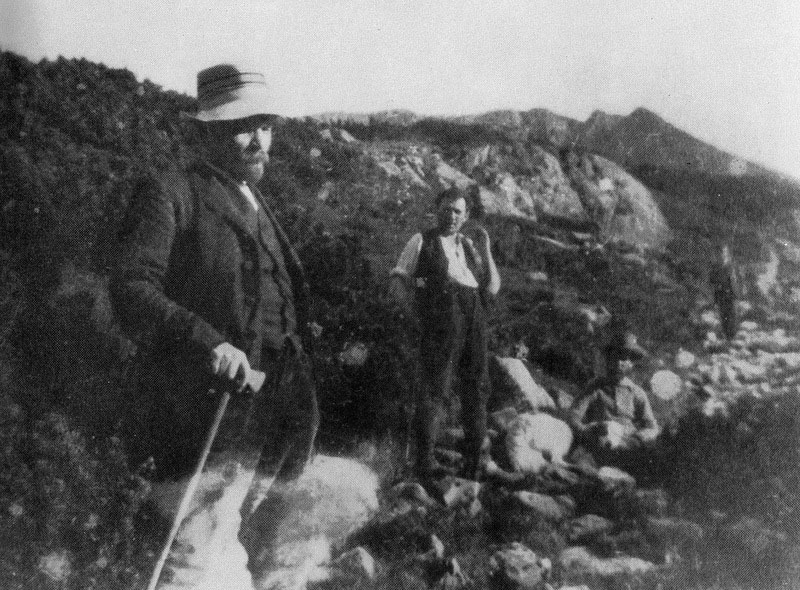
In the course of an e-mail conversation about faux amis, Lizok happened to mention that “A панама hat is not a Panama hat.” I can’t describe my shock; all my bilingual dictionaries define панама (penultimate stress: пана́ма) as ‘Panama (hat),” and why would one ever suspect anything different? And yet when I went to Russian Wikipedia I discovered that, sure enough, the images showed something completely different, what the corresponding English article calls bucket hat, fisherman’s hat, Irish country hat, and session hat (one could also call it a sun hat). Looking it up in the Национальный корпус русского языка (Corpus of the Russian Language), I found a number of hits in Danilkin’s 2017 biography Ленин: Пантократор солнечных пылинок [Lenin: Pantocrator of dust motes in sunlight], including this: “Некое подобие гибрида панамы и банной войлочной шапки мы видим на известной фотографии «Ленин в Закопане».” [We see a certain semblance of a hybrid of a Panama hat and a felt bath hat in the famous photograph “Lenin in Zakopane”]. My question is, how and when did the referent change? And what do Russians call a Panama hat as others understand it? The Wikipedia article doesn’t have a Russian equivalent!
Rescuing Forgotten Geniuses.
Brad Bigelow of the Neglected Books Page (which I linked to just last November) has a good post on a topic dear to my heart: We Must Rescue Forgotten Geniuses If We are to Read Them. I’ll quote the start and end (here’s an archived version of the Tadepalli piece), and if those excerpts intrigue you you can click through to read the whole thing:
Apoorva Tadepalli published an Op-Ed piece in the New York Times recently, titled “We Need to Read the Forgotten Geniuses, Not Rescue Them.” As anyone who’s familiar with this site can imagine, this was an article I read with interest. For over forty years, I’ve been fascinated with looking for forgotten writers and reading their books, a fascination that I’ve used this site since 2006 to share, a fascination that led in 2021 to the creation of the Recovered Books series from Boiler House Press and my own rescue of a few of my discoveries. So I was eager to learn what Tadepalli had to say and agreed enthusiastically with some of it. But I hope she will allow me the right to quote some of her points and offer my thoughts in response.
“Critics,” she writes, “play a role in determining which books published today should be branded ‘instant classics,’ which authors are best described as ‘little-known’ and which books published in past decades or centuries merit re-examination.”
Ah, if it were this simple. The role of critics in the publishing process is almost entirely post-natal. When a book is first published, critics can influence its sales and its reception by the reading public by what they say in reviews, but few publishers consult any critic when deciding to reissue a book that’s been out of print — and in most cases, consequently out of any critical conversation — for some time. What a reissue publisher, at least any not exclusively targeting an academic audience and sales to university libraries, considers are three questions foremost: Is the book good (meaning of sufficient merit to justify being associated with the imprint)? Is the book in the public domain or are the rights attainable for a reasonable price? Will enough readers buy the book to recoup costs and, with some luck, earn a profit?
The first question — merit — is in the critic’s territory only to the extent that the football is in the territory of a fan watching the game. Except in this case, the stands are deserted, aside perhaps from a lone die-hard or two. We owe the rediscovery of Henry Roth’s Call It Sleep, for example, to the fact that Alfred Kazin and Leslie Fiedler, two of the more prominent critics of the time, both named the book as one of “The Most Neglected Books of the Past 25 Years” when queried by The American Scholar magazine. Their enthusiasm for Roth’s novel, along with Irving Howe’s (another influential critic) convinced Avon Books to reissue the book — accompanied by a remarkable amount of advertising, for a paperback edition of a forgotten book, in places like The Saturday Review of Literature. […]
Sumercé.
Today’s NY Times story by Julie Turkewitz (archived) is both educational and annoying. Here is the meat of it:
In most of the Spanish-speaking world, the principal ways to say “you” are the casual “tú,” and the formal “usted.” But in Colombia there is another “you” — “su merced,” meaning, “your mercy,” “your grace” or even “your worship,” and now contracted to the more economical “sumercé.”
I did not know that, and I am pleased to have my knowledge of Spanish expanded. But here’s how the piece opens:
After Altair Jaspe moved from Venezuela to the Colombian capital, Bogotá, she was taken aback by the way she was addressed when she walked into any shop, cafe or doctor’s office.
In a city that was once part of the Spanish empire, she was no longer “señora,” as she would have been called in Caracas, or perhaps, in her younger years, “muchacha” or “chama.” (Venezuelan terms for “girl” or “young woman.”) Instead, all around her, she was awarded an honorific that felt more fitting for a woman in cape and crown: Your mercy.
Would your mercy like a coffee?
Will your mercy be taking the appointment at 3 p.m.?
Excuse me, your mercy, people told her as they passed in a doorway or elevator.
“It brought me to the colonial era, automatically,” said Ms. Jaspe, 63, a retired logistics manager, expressing her initial discomfort with the phrase. “To horses and carts,” she went on, “maybe even to slavery.”
And here’s how it ends:
[Read more…]
Quillon.
Nelson Goering’s Facebook post introduced me to a word whose pronunciation is disputed by the dictionaries:
I’m now curious how people I know pronounce quillon (the cross-guard of a sword). […] The OED gives as the only pronunciation /ˈkwɪlən/ (‘kwillen’). Wiktionary has only /kiːˈjɒn/ (‘kee-YAHN’). Neither evening hints at the existence of other pronunciation possibilities. I myself say /ˈkiːjɒn/ (‘KEE-yahn’).
Merriam-Webster has an even more Frenchified pronunciation; my instinct would be to favor the fully anglicized version, and since it’s sanctified by the OED I intend to use it in the unlikely event I ever have occasion to say the word. Rahul Gupta in the comments to Nelson’s post writes:
Pronunciation would be Anglicized like other such words established in English usage. Anglophone folk who have ado with swordplay these days say “kwillonz”, rhymes “villains”.
Which I like because it backs up my own preference, but I’m wondering if any Hatters have experience with the word and how they say it. (If you’re curious, the word is derived from French quille ‘skittle,’ borrowed from Middle High German kegel.)
Sorokin’s Blue Lard.
A bit over a year ago I posted about Vladimir Sorokin’s 2006 novel День опричника (Day of the Oprichnik), remarking on the change in his work since the wild novels of the early ’90s; now, thanks to the generosity of New York Review Books, who sent me Max Lawton’s translations of his 1999 novel Голубое сало [Light-blue salo], called Blue Lard, and a bunch of stories collected as Red Pyramid, I have discovered the transitional element between early and late Sorokin. According to Mark Lipovetsky in Russian Literature since 1991, “Sorokin intentionally wrote Blue Lard in an attempt to expand his readership and introduce his aesthetics in a less experimental way than in his early fiction,” and it worked: published in a large print run, it was wildly controversial (protestors threw copies into a large model of a toilet bowl) and made him far more famous. It starts in Siberia in 2068 when scientists are cloning Russia’s great writers in a clandestine lab and harvesting the blue lard that forms on their bodies, and moves back in time to an alternate 1954 where Hitler and Stalin rule the world together; if you want more of a description, you can read Dustin Illingworth’s very favorable NY Times review (archived). Personally, although I enjoyed many of the delightfully perverse episodes here — and of course the parodies of Tolstoy, Dostoevsky, et al. — I prefer the early books with their maximum épatage, and you can get a nice dose of that in the story collection, which ranges from 1981 to 2000 and is (of course) brilliantly translated by Lawton, who is very much on Sorokin’s wavelength (see this LH post). Here I will just point out a couple of passages to which I can add something useful.
[Read more…]
Recent Comments