The redoubtable Michael Everson has created a page called “Gach uile rud faoi Ogham ar an Líon/Every Ogham thing on the Web” that includes General links, Scholarly links, Standardization links, Font links, Pagan links, Commercial links, and Other links. Enjoy the cornucopia!
(Via wood s lot.)
OGHAM ON THE WEB.
May 23, 2004 by Leave a Comment
REVEAL.
May 22, 2004 by 9 Comments
I have learned from a Mark Liberman post at Language Log that there is a noun reveal meaning (according to the AHD)
The part of the side of a window or door opening that is between the outer surface of a wall and the window or door frame. b. The whole side of such an opening; the jamb. 2. The framework of a motor vehicle window.
or, in the (perhaps clearer) words of the OED,
A side of an opening or recess which is at right angles to the face of the work; esp. the vertical side of a doorway or window-opening between the door- or window-frame and the arris [‘the sharp edge formed by the angular contact of two plane or curved surfaces’].
That’s interesting enough, but what’s amazing is that it has nothing to do with the verb reveal (which is related to veil); it’s from a totally different (and obsolete) verb revale ‘to lower, bring down,’ which is related to vale and valley. As Mark says, Live and learn.
MORE JAPANESE VERBING.
May 21, 2004 by 4 Comments
Anyone who enjoyed my earlier post on the way Japanese conjugates verbs made from borrowed words, based on one at No-Sword, will want to read his new entry “More unusual Japanese verbs.” One of his tidbits:
gomakasu — means “misrepresent (in a deceptive way)”, and again, has ateji that mean “mis-bewitch-style” + s + u. The origin story is great, though:
gomadouran (“sesame seed bags [or cases]” — not ateji here, these characters reflect etymology) were a kind of, uh, sesame seed candy, hollow on the inside. (Hence “bag” or “case”, I suppose.) They quickly became known by the more direct name gomakashi (“sesame seed candy”).
This word then came to have a figurative meaning: something which has an appetising exterior, but nothing inside; and then, the abstract idea of misrepresenting something in this way. gomakasu the verb was a back-formation, because gomakashi sounds the nominalised form of such a verb.
Once this verb had been born, ateji were used to write it — maybe because of a desire to pun, maybe because the first person to write it down wasn’t aware of the etymology.
So, to summarise: we have inaccurate S-J ateji used to write a verb which is a back-formation from a legitimate S-J word.
Best half-S-J verb ever.
He explains ateji thus:
FAILI.
May 21, 2004 by 11 Comments
You know, I thought I had this Iraq thing pretty much figured out, after reading The Shi’is of Iraq, most of Charles Tripp’s A History of Iraq, and innumerable newspaper and magazine stories. Sunni Kurds in the north (riven by internal dissension), Sunni Arabs in the center, Shi’i Arabs in the south (long oppressed, some “swamp Arabs” in reed huts dating from Sumerian times), Baghdad a mixture of everything, Jews formerly an ancient and important element of the population but expelled after the foundation of Israel. Oh, and some Turkomans up north. Then I got to page 151 of Tripp and found this description of the megalomaniac dictator du jour (the jour being the late ’50s and early ’60s), General ‘Abd al-Karim Qasim (aka Kassem): “Qasim… came from a modest background and from a family which was more representative of the diversity of Iraq’s varied population than that of most of his brother officers (his father was a Sunni Arab from Baghdad, but his mother was a Faili (Shi’i) Kurd).”
Faili? I searched my Islamic reference works in vain; Google, as so often, saved the day, and I am here to report that “The area around Kirkuk and south to Khanaqin is the preserve of the Faili Kurds, who, unlike the majority of Kurds, are Shias.” They have had a rough time of it (deported in the early ’70s and again, much more brutally and extensively, in 1980), and needless to say they have their own website. From the latter we learn, concerning the origin of the name:
The Faili (Fayli or Pahli) Kurds are an integral part of the great Kurdish people and they speak the Kurdish language in the Laurie and Laki (dialect) accent. The roots of the Faili Kurds go back to the Indo-Aryan (Europeans) immigrants of the first millennium BC…
As for the name of (Faili), there is more than one explanation. In his book (The lexicon of countries, in Arabic Mujam al-Buldan) Yaqout Al-Hamawi mentions in 13th century that the Failis are those who reside the mountains separating Iran and Iraq. In addition, that they are as huge as elephants, the word fil means elephant in Arabic. Another explanation goes to a different direction as it says that the name belong to the ruler of the mentioned area. The historical fact on the root of the name of the Pahli is fully clear. As M.R. Izady notes in his book (The Kurds: A Concise Handbook, London, 1992) the territory inhabited by the Faili, Pahli, Fayli Kurds was known as “Pahla” meaning Parthia since the 3rd century AD. The Arabic texts recorded the name as FAHLA or BAHLA, Arabic lacks the letter “P” from Fahla and it has since then evolved to Faila and later Faili.
Take that for what it’s worth. At any rate, Iraq, like the world in general, is a complicated place. I just thought you’d want to know.
Update (June 2024). There is now a fairly substantial Wikipedia article.
THE DECAMERON WEB.
May 20, 2004 by 6 Comments
The Brown Italian Studies department has created a bilingual online version of Boccaccio’s Decamerone that has been expanding since its beginnings ten years ago and particularly since it was awarded a two-year grant by the National Endowment for the Humanities in 1999.
Since the project’s inception, it has made substantial progress. There are now well over 300 documents and dozens of images, all designed to provide our visitors with an easily navigable site and abundant information related to the study of Boccaccio’s masterpiece. Though the project was originally produced as a multimedia resource for students here at Brown, it soon became apparent that teachers and students around the world were benefiting from its materials . In response to this demand, we began a series of improvements and additions which, we hope, will make it even more useful to a wide range of users. This expansion is of course an endless endeavor and we depend upon the feedback of our visitors to guide us in the project’s growth.
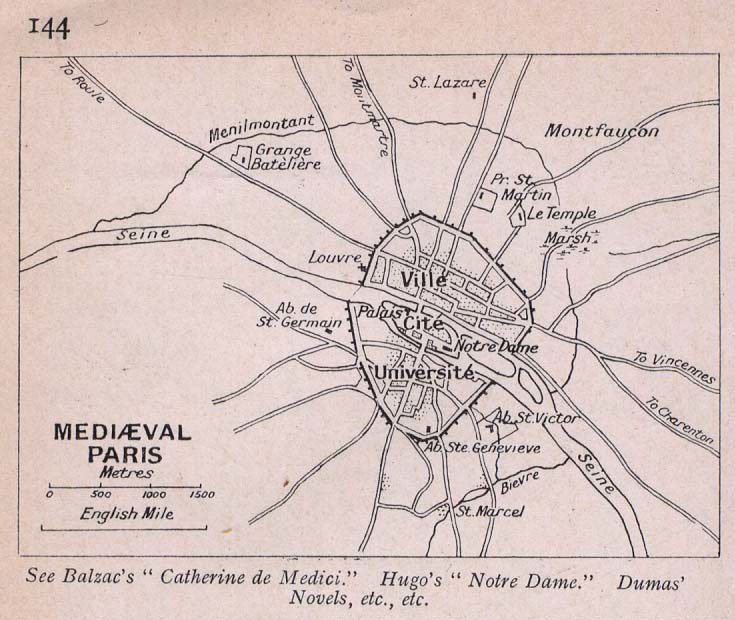
The basic element is the text (whether you choose the original Italian or the century-old English translation, you can click on the paragraph number to get the corresponding section in the other language); alongside it, they have created a cast of characters (the “brigata”); sections on history, society, religion, and other background areas; a collection of maps (hyperlinked so that if you click on, say, Paris you get not only maps from the medieval and later periods but links to related portions of the text); a section of links to relevant resources (including similar projects such as the Canterbury Tales, the Confessions of Augustine, and others, including the mysterious Zifar or Libro del cauallero de Dios, “generally held to be Castile’s earliest original work of prose fiction,” of which I had never heard), and much else. A remarkable site, whose discovery I owe to a MetaFilter thread by conservative controversialist hama7.
LANGUAGE ENROLLMENTS UP.
May 19, 2004 by 15 Comments
Geoff Pullum at Language Log is encouraged, and so am I, by the news that “based on Fall 2002 enrollments in courses as compared to Fall 1998 all languages shot up, especially the less commonly taught ones, and some are up by very substantial factors indeed.” He gives percentages ranging from American Sign Language (432%) to Spanish (14%) and adds “It’s true that Russian was hardly up at all (half a percent); but every language was up, and the aggregate percentage enrollment increase was 17%.” Good news indeed.
LIKE A DOG IN A FIELD.
May 19, 2004 by 9 Comments
A 2001 interview with W. G. Sebald (put online by the New Yorker) makes me want to read his work (which I have still not gotten around to); this paragraph, in particular, resonates strongly with my own feelings about how to navigate life:
But I never liked doing things systematically. Not even my Ph.D. research was done systematically. It was done in a random, haphazard fashion. The more I got on, the more I felt that, really, one can find something only in that way—in the same way in which, say, a dog runs through a field. If you look at a dog following the advice of his nose, he traverses a patch of land in a completely unplottable manner. And he invariably finds what he is looking for. I think that, as I’ve always had dogs, I’ve learned from them how to do this. So you then have a small amount of material and you accumulate things, and it grows, and one thing takes you to another, and you make something out of these haphazardly assembled materials. And, as they have been assembled in this random fashion, you have to strain your imagination in order to create a connection between the two things. If you look for things that are like the things that you have looked for before, then, obviously, they’ll connect up. But they’ll only connect up in an obvious sort of way, which actually isn’t, in terms of writing something new, very productive. You have to take heterogeneous materials in order to get your mind to do something that it hasn’t done before. That’s how I thought about it. Then, of course, curiosity gets the better of you.
His thoughts on coincidence are also right up my alley:
Yes. I think it’s this whole business of coincidence, which is very prominent in my writing. I hope it’s not obtrusive. But, you know, it does come up in the first book, in “Vertigo,” a good deal. I don’t particularly hold with parapsychological explanations of one kind or another, or Jungian theories about the subject. I find those rather tedious. But it seemed to me an instance that illustrates that we somehow need to make sense of our nonsensical existence. You meet somebody who has the same birthday as you—the odds are one in three hundred and sixty-five, not actually all that amazing. But if you like the person then immediately this takes on more . . . and so we build on it, and I think all our philosophical systems, all our systems of our creed, all constructions, even the technological worlds, are built in that way, in order to make some sort of sense, when there isn’t, as we all know.
(Via wood s lot [05.18.2004].)
DER VOLF/THE WOLF.
May 18, 2004 by 2 Comments
Jim at Uncle Jazzbeau’s Gallimaufrey is doing a wonderful thing: he’s transliterating and translating a famous poem by the Yiddish poet H. Leivick called Der volf (The Wolf). In his introductory post he provides this quote from Sol Liptzin’s A History of Yiddish Literature to describe it:
In another long poem, The Wolf (Der Volf, 1920), Leivick has a rabbi arise from a mound of ashes as the sole survivor of a masacred Jewish community. Looking about him the rabbi sees neither victims nor victors. The victims have perished and the victors have moved on. Only ashes, smoldering chimneys, and uncanny silence surround him. He burrows in the mound to find the limbs of the perished Jews so that he could bury them in the Jewish cemetery. In vain! Nought is left of them but coal and ashes. When night descends upon the ravished, deserted town, the Rabbi creeps away to the forest and is gradually transformed into a werewolf. Later on, when Jews expelled from other communities, find their way to this town and seek to rebuild the devastated houses and the synagogue of which only bare walls remain standing, they ask the rabbi, when he reappears, to resume religious services. But he insists that the ruins be retained as a memorial for his dead generation and that the synagogue be not rebuilt. He himself does not want to live on. He howls as a wolf through the nights and terrorizes the new inhabitants. On Yom Kippur he invades the synagogue as a werewolf and finds release from his suffering when he is beaten to death. Then the newcomers need no longer fear this last survivor whose existence was bound up with murdered generation. They can resume the reconstruction of a new communal life. This poem was regarded, after the Hitler catastrophe, not as Leivick’s reaction to Petlura’s pogroms but as a prophetic vision of the later and greater extermination of Jews by their Christian neighbors.
He has now put online Part 1 of his translation, which begins:
… and it was on the third morning,
when the sun arose in the East
there remained in the whole town not a trace.And the sun climbed higher and higher,
until it had come to the middle of the sky,
and its rays met with the rabbi’s eyes.And the rabbi was lying on a mountain of ash and stones
with a ravenous mouth and staring pupils,
and in his soul there was silence and darkness and nothing more.
Go read it, and roll the original around in your mouth even if you don’t know Yiddish (“… un es iz geven oyfn dritn frimorgn,/ ven di zun iz oyfgegangen in mizreykh-zayt”)—it’s amazing stuff, and I’m eagerly awaiting further installments of Jim’s excellent version.
Leivick had quite a life, according to this biography; the following bit particularly struck me:
During the years when he achieved worldwide fame as a poet and his works were translated into many languages, Leyvik worked as a wallpaper hanger in New York. As a contemporary poet observed: “Many of us saw him striding in New York’s streets with rolls of wallpaper in one hand and with a brush and a bucket of paste in the other.” In 1932 Leyvik was forced to stop work and spend four years in the Spivak sanatorium for tuberculosis in Denver, Colorado. There he created some of his best, almost untranslatable poems, achieving a certain lucid serenity and writing, among other things, a beautiful sequel of “Songs of Abelard to Heloise” and a cycle of poems on Spinoza (the idol of Yiddish intellectuals).
Makes me wish I could read Yiddish. (Technically, I can, with a great deal of effort, but in practice I’m not going to without the kind of crutches Jim is so generously providing.)
THE LANGUAGE OF PUTIN.
May 17, 2004 by 12 Comments
According to Michele A. Berdy in a Moscow Times article, Putin “owes his great popularity with the Russian public to the way he speaks. He’s the first Russian president who sounds like the guy next door.”
His are not the folksy inaccuracies of Mikhail Gorbachev (ложьте for положите), the verbal tics of Boris Yeltsin (Понимаешь? You know?) or the malapropisms of Viktor Chernomyrdin (Мы всегда можем уметь—We can always be able). And it’s not that Putin’s speech is crude (though it can be salty), street-tough (though cop-talk sneaks in) or inappropriate (though it comes close). But it is plain-talking, straight, down-to-earth Russian. He calls it like he sees it.
She gives many examples, well worth reading if you know any Russian. (Via Taccuino di traduzione.)
ALL INTERPRETERS BAFFLED.
May 17, 2004 by 5 Comments
Will Baude at Crescat Sententia introduces a post on Bolling v Sharpe, “a school segregation case that—like Brown—turns 50 today,” with a wonderful quote from a Stoppard play, Professional Foul. The scene “takes place during a presentation at a conference of philosophers in Prague. An English gentleman is speaking about the philosophy of language, and interpreters are gamely translating his remarks into French, German, and Czech for the benefit of the non-English-speaking philosophers present.”
Stone: ‘You eat well,’ says Mary to John. ‘You cook well,’ says John to Mary. We know that when Mary says, ‘You eat well’, she does not mean that John eats skilfully. Just as we know that when John says, ‘You cook well’, he does not mean Mary cooks abundantly. . . No problems there. But I ask you to imagine a competition when what is being judged is table manners. (Insert French interpreter’s box—interior.)
Interpreter: … bonne tenue à table …
Stone: John enters this competition and afterwards Mary says, ‘Well, you certainly ate well!’ Now Mary seems to be saying that John ate skilfully—with refinement. And again, I ask you to imagine a competition where the amount of food eaten is taken into account along with refinement of table manners. Now Mary says to John, ‘Well, you didn’t eat very well, but at least you ate well.’
Interpreter: Alors, vous n’avez pas bien mangé … mais … (All Interpreters baffled by this.)
Recent Comments